The Life Insurance Medical Exam, Explained
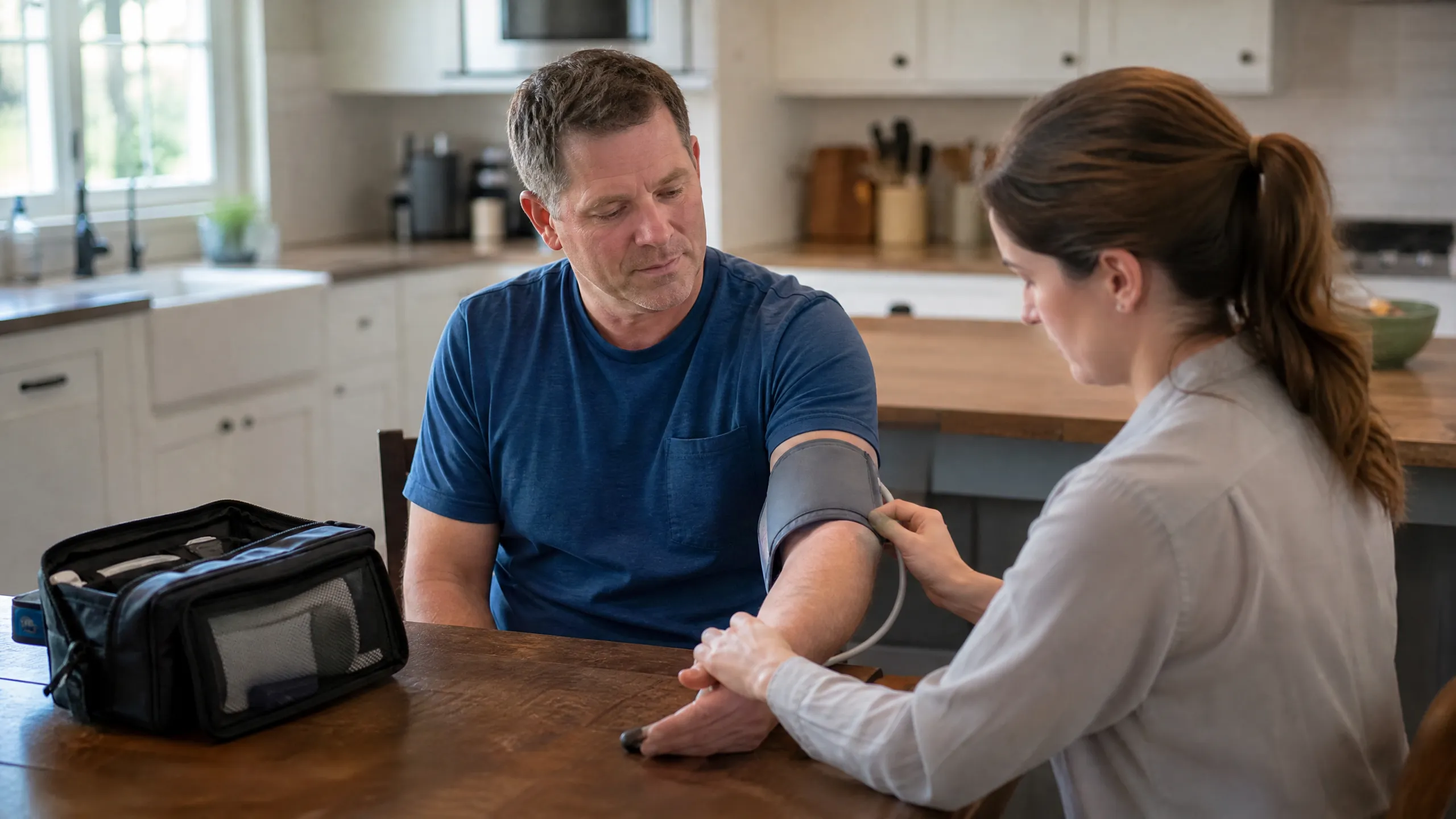
If you have had a military physical, this will feel familiar and shorter. A paramedical exam takes 20 to 40 minutes, happens wherever you want it to, and is done by a technician who works for a testing company rather than the insurer. Many veterans now skip it entirely. This page covers both cases: what happens if you take the exam, and what gets you out of it.
First, you may not need one: no-exam life insurance
A large share of applications now go through what the industry calls accelerated underwriting. Instead of an exam, the insurer checks outside data: your prescription history, your driving record, prior application records, and in many cases your electronic health records. A clean file can produce a decision the same day.
Industry survey data reported in December 2025 found that an average of 59 percent of US individual life applications now qualify for one of these no-exam paths. That is a real shift from a decade ago.
You do not pick the path. The insurer routes you based on your age, the coverage amount, and how your answers look. In 2026, no-exam programs commonly top out somewhere between $1 million and $4 million of coverage, and the largest amounts often carry age limits around 55 to 60. If you are older, or asking for a large amount, or your answers raise a question, expect an exam. The full picture is in how underwriting works.
What happens at the exam
The technician comes to your home or office, or you go to a testing site. It is free to you. The insurer pays for it.
Every exam covers four basics:
Height and weight
Blood pressure
Pulse
A set of health history questions, which repeat what you already put on the application
Most exams add a blood draw and a urine sample. Some add an EKG, depending on your age and how much coverage you asked for.
Timing runs roughly like this. Blood and urine alone take 10 to 20 minutes. A full paramedical exam with blood and urine takes 20 to 40 minutes. Add an EKG and it runs 30 to 60 minutes, though the EKG itself is usually under 10 minutes.
What the lab panel actually tests
This is the part people want to know and rarely get told plainly. The blood and urine samples screen for:
Category | What it covers |
|---|---|
Lipids | Cholesterol and related blood fats |
Blood sugar | Glucose, and often a longer-term average |
Liver function | Liver enzymes |
Kidney function | Standard kidney markers |
HIV | Standard screening |
Nicotine | Cotinine, the substance your body makes from nicotine |
Drugs of abuse | Standard panel |
Urine | Protein and sugar, plus nicotine and drug screening |
Over about age 50, many insurers add a heart marker to the blood panel. Two things on this list surprise people. The first is nicotine: the test finds it whether it came from cigarettes, cigars, vaping, dip, or pouches. What that does to your price is covered in tobacco, vaping, and nicotine. The second is that you get told the results. Ask for them. For some veterans this exam is the first full blood panel they have had since they got out.

When an EKG gets added
There is no single industry rule here, and carriers differ more than you would expect. As a general pattern, a resting EKG starts showing up somewhere around age 50 to 60, combined with coverage amounts ranging from about $100,000 to over $3 million depending on the company.
A treadmill or stress EKG is now rare. Where it still appears, it is reserved for very large cases, often over $10 million, and usually only when something else in the file calls for it. If someone tells you a stress test is routine, it is not.
How to prepare
None of this is about gaming the result. It is about making sure the numbers reflect your actual health instead of a bad week.
Schedule it for the morning, and ask whether to fast. Fasting for 8 to 12 hours gives cleaner cholesterol and blood sugar readings.
Drink water the day before. Dehydration makes a blood draw harder and can skew results.
Skip alcohol for 24 to 48 hours. It moves liver enzymes.
Go easy on salt and heavy food for a day or two. Both push blood pressure up.
Skip hard exercise the day before. Intense training can temporarily affect protein readings and other markers.
Sleep. Blood pressure taken after four hours of sleep is not your blood pressure.
Take your regular medications as prescribed, unless the insurer tells you otherwise. Do not stop anything to look healthier. It does not work and it is dangerous.
Have your details ready: medications and doses, your doctor's name and address, and family history for parents and siblings.
If your reading comes back high and you know it is not normal for you, say so. Bring evidence. Readings can be reconsidered, and the process for that is in declined or rated: what to do next.
A note on VA care
If you get your care through the VA, pull your own records before you apply. You can request them through VA health care records access. Two reasons. First, you will know what an underwriter is going to see. Second, records sometimes contain errors, and it is far easier to correct one before it becomes the reason for a rating than after.
Frequently asked questions
Do I have to pay for the exam?
No. The insurer pays for it. It is scheduled at your convenience, at home, at work, or at a testing site.
How long does the exam take?
Usually 20 to 40 minutes for a standard paramedical exam with blood and urine. Blood and urine alone can be done in 10 to 20 minutes. If an EKG is included, allow up to an hour.
Can I get life insurance without a medical exam?
Often, yes. Many applications now qualify for a no-exam path decided from data instead. It depends on your age, the coverage amount, and your health history. The insurer decides which path you take.
Will they tell me the results?
Yes, and you should ask for them. The lab panel is a full workup, and it occasionally catches something worth taking to your doctor.
Does the exam test for nicotine?
Yes. The panel screens for cotinine, which your body produces from nicotine. It does not distinguish cigarettes from vaping, cigars, dip, or pouches.
Your next step
Take the quiz, Which Coverage Fits You? It points you to the coverage structure worth pricing, so you know what you are applying for before an exam is ever scheduled. Or get the free guide, "Leaving the Service: Your Life Insurance Decision Guide".
Sources: ExamOne, What to Expect (myexamone.com/what-to-expect/); Insurance Business, "Life insurers widen accelerated underwriting," December 18, 2025, reporting Gen Re survey data; NAIC, Accelerated Underwriting (content.naic.org/insurance-topics/accelerated-underwriting), updated April 7, 2026; VA, Get Your VA Medical Records (va.gov/health-care/get-medical-records/). Accessed August 15, 2026.